Content

Showing posts with label Fotocamere. Show all posts

EOS 5D MARK3 - Noise issues at low ISO and Highlights Priority On

Wednesday, 1 May 2013
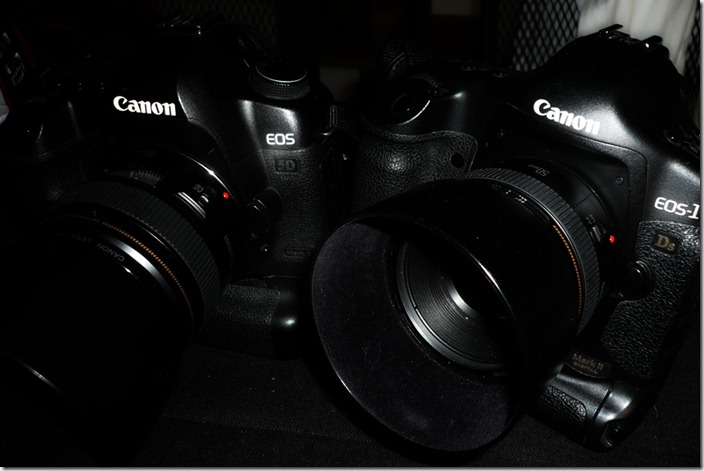
eos5d-markiii-ef50mmI have an Eos 5D Mark3 since few months, it replaced the Eos 5D2 I used in India that had partially left me because of poor weather sealing giving problems to the contacts. I always judged with some reservation the image quality of the 5d line , coming from the 1Ds mark2. These cameras do produce excellent images, but some  really bizarre problems in cameras of this level do continue to appear.
 
Already in the Indian photos, taken with Eos Eos 40D and 5D Mark2, I started to notice some strange things: the old 40D held up much better than the other when some overexposure of the shadows is applied in ACR, without altering the overall exposure. The Eos 5D Mark2 had often noise in the shadows at low ISO, even 100, a noise made of stripes (vertical banding), as the image from a fax.
 
I have not changed the Mark2  because the camera was broken, the problems with the contacts were resolved immediately by the excellent Canon Service Center in Rome. I decided to change it for many reasons, starting from the AF, a most versatile one,  but also for a significant improvement in the well-known problems of noise, at least as for these already seen in the EOS 5D2. A general upgrade in short, without waiting for miracles but certainly hoping for a more complete and versatile camera for all uses, eg. also for sport, in which the Mark2 was very lacking.
READ ALL >>>

Comparing EOS 5D MARK2 versus EOS 7D and vs. EOS 30D at high ISO (ISO6400), about noise, detail preservation, image quality, dynamic range

Friday, 7 December 2012

compared_eos_50Dvs60Dvs7D

VAI ALL’ARTICOLO IN ITALIANO >>>


Comparing EOS 5D MARK2 versus EOS 7D and vs. EOS 30D at high ISO (ISO6400),
about noise, detail preservation, image quality, dynamic range

As always I run the test in a not scientific manner but simply aiming to highlight some aspects that I think are important in determining the choice of a camera or a lens, based on my personal needs. I have to decide whether to chose as second body to my Eos 5D Mark2 an Eos 7d or keep the current Eos 30D.

I've never used an Eos 7D, I would say that it is the only Canon camera in the area of semi-pro and pro that I never had in my hands once. Given the many threads about this camera, which can be found on the net, with absolute detractors and others who worship it, at the end I started to have serious doubts about the quality of the files produced by the 7D. In general, I am convinced that too many megapixels of nowadays cameras are only an problem, and very little do to the actual quality of an image. I also wanted to see if this marketing has even gone so far as to produce a camera with a density of pixel such to be worse than a precursor as the 30D, with only 8MP. In general I do not believe this, among other things, 18MP has now become the standard for all APS-C cameras from Canon.

eos5Dmk2I read around very bad things about the 7D: that it produces very soft files, that the autofocus fails, that as you just raise the ISO it produces a lot of noise and loses details, that eventually it has an image quality equal to an entry-level camera . Well, unless my student who has just became owner of a 7D has been particularly lucky, by having received a copy better than others, or maybe just thanks to the recently updated firmware, the fact is that by exploring this camera, now I would say... bullshit!

I understand even more as much the inexperience and indeed real ignorance of many makes so that the camera is charged for their blunders. The EOS 7D's autofocus if set on maximum accuracy, in one shot mode, is as precise as a razor. The 7D does not produce files softer than other cameras when shooting in RAW and the same photographic processing is applied to images.

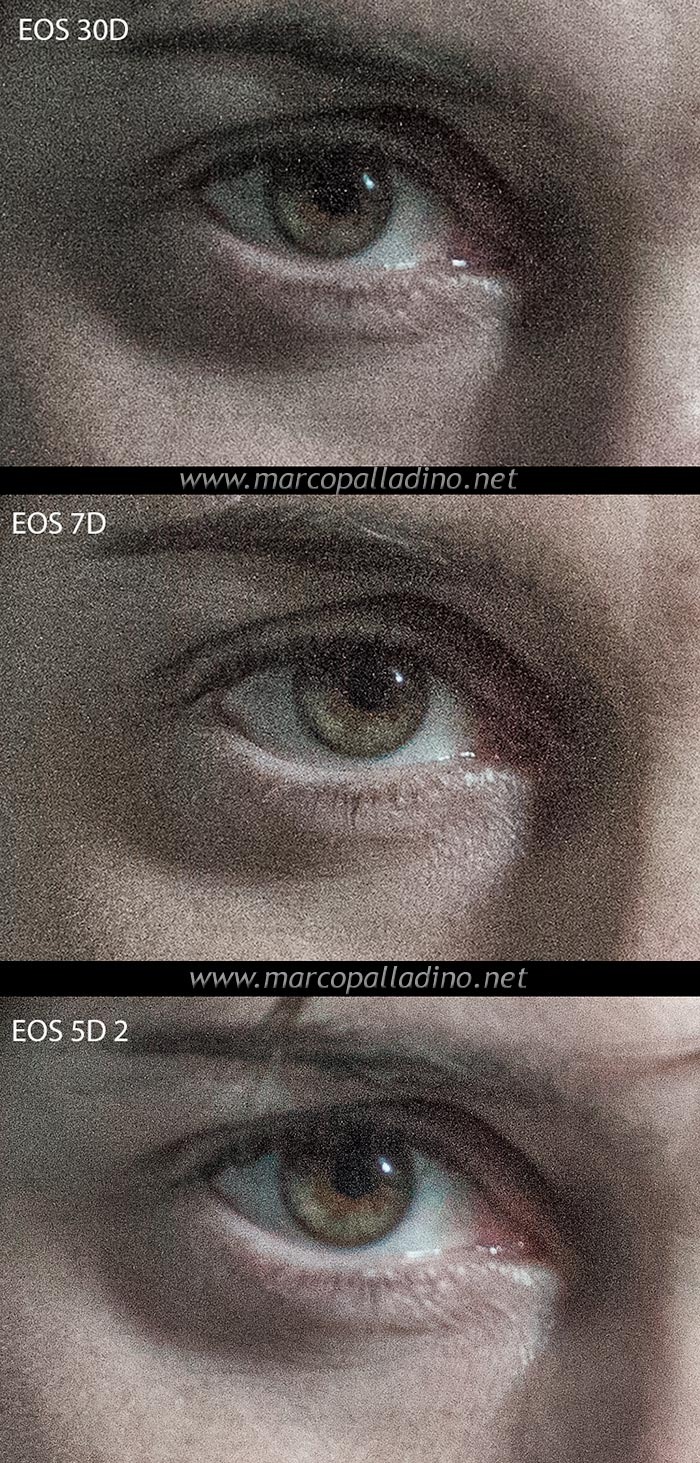
As quick test we compared the detail on the area in ​​semi-shade (left eye) of a portrait, executed with an EOS 30D, EOS 7D and an EOS 5D Mark2, at well ISO 6400. Obviously, the EOS 30D does not have the ISO 6400 but just shoot at ISO 3200, RAW, and then raise exposure by 1 stop right in Camera RAW. I present to you the 100% crop of the three shots and then I'll make my comments. As it is standard for this type of comparison, I have NOT reduced the files from cameras with higher resolution but up-resized the lower resolution ones up to the largest size, in our case, the 21MP of the eos5D, or 5616 pixels on the longest side. The crop 100% means that this image at 700px corresponds to the detail taken as 100% magnification.
30D-7D-5D2-ISO6400

Conclusions

For all three pictures we used a EF 85mm 1.8 USM @ f4, to get the best quality from the optics.

In our crop, what we see is indeed the noise from the camera set at the highest ISO (6400 ), but also the preserved details, colour and dynamic range. We present therefore the partially shaded eye  of the portrait where certain differences are more noticeable. A partial recovery on the shadowed parts guarantees to better highlight the limits of the dynamic range of each camera. The lowerer DOF of the full-frame at F4 (identical for all three shots), makes the photo of EOS 5D slightly softer (the focus is on the right eye, not the left), but I assure you that level of sharpness on the focal plane of all three shots is identical.

What you need to look at is instead the iris of the eye, the nuances of colour, the details inside. Clearly the EOS 5D Mark2 is a notch above the other two, as one might expect from a sensor that has virtually half the density of photodiodes with respect to 7D, but not with respect to 30D. The EOS 30D as old as it remains, is still a good camera. Do not be fooled by advertising, its field quality is very high even today, especially if you use good optics. Files from the 30D when enlarged can almost match with a camera like the EOS 7D, even at ISO 6400 that are not available in the EOS 30D (actually a firmware update would be enough to have them, but of course the Canon is careful not to do so).

The image produced by EOS 7D is still better than the EOS 30D’s (always look at the iris of the eye), but not the same jump that you have on EOS 5D2. This is still a great result for the EOS7D, that ISO 6400 and 18MP have less noise and more detail and in shades and colour. Really good result.

This small test teaches us another thing: if we compare a file of 8MP and 18MP the real difference of magnification is about 30% (not double as one might expect). If you enlarge a file like an 8MP to 18MP, the difference in detail is really ridiculous; such a file if correctly processed and printed would produce no perceptible difference. What are then the 18MP of an EOS 7D good for, apart from the advertising? Well we actually need those, but not if we use the photos at 100% magnification. That is, if we do not need to crop the photo since we can get optically close enough, then between 8 and 18 the difference is virtually ZERO! But sometimes crop is unavoidable, for example in the photo of fauna and for sport. So then when a file is cut 50% to 4 MP or 9MP things get very different. The 9MP file still has lot details to make large prints, the other one begins to suffer a lot, at 4MP (still usable, with the right processing).
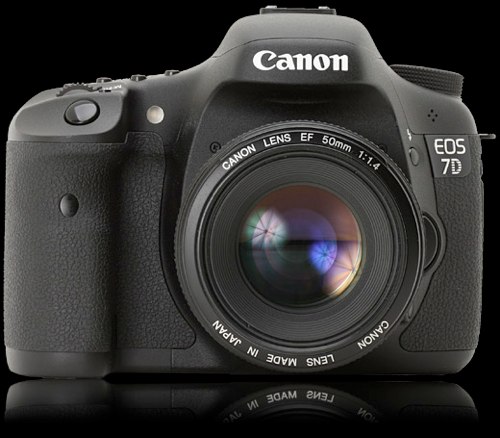
Canon EOS 7D while doubling the number of pixels and increasing by 30% the resolution still maintains a level of noise even less than 30D, this is definitely a great achievement and I would say not at all due to the noise reduction applied by the software, the files are in fact identical in Camera Raw in terms of sharpness. On final word, the EOS 7D is an excellent camera, even if image quality is not very much better than a 30D’s or 40D’s. You choose it for many other reasons: resolution to crop, as said, but also a high-performance autofocus in sports, a great construction and excellent sealing, the flash that remotely controls other flashes, etc. etc… in short, many other things that "make the life of a photographer better". Even to use it is a real joy, much better even than EOS 5D, in comparison 30D looks as a plastic toy (it is not). But:

if you do not take pictures in rain, for sport, wildlife, etc.., and you've purchased the EOS 7D to take pictures on vacation, convinced that the hundreds of euro more you paid will ensure you better photos, then you've got a blunder, commercially induced, but a blunder. The 7D is great, but only IF you use it at its maximum, in sports and / or wilderness area, then it really pays you off. Here's how some lamentations were born!

In another test, run against EOS 30D + EF 85mm 1.8 but at aperture of 5.6 and the same pose, we coupled the EOS 7D with a Canon EF 15-85 @ 85mm and aperture 5.6 (minimum that is allowed by the zoom at 85mm). Well despite the 8MP against 18MP, the 30D+85mm prime brings out more details, or rather: BETTER LENSES PRODUCE BETTER IMAGES DESPITE THE LOWER RESOLUTION OF THE SENSOR. Mind that the EF 15-85 is a great zoom lens and the picture it produced  is sharp, but the quality that you get with a prime even on an old camera is higher, namely: EOS 30D (used) + 85mm 1.8 costs about 700 euros, the EOS 7D (used) + 15-85 almost double it. Obviously they are very different set-ups for different purposes, but everyone can draw his own conclusions.

©2012 Marco Palladino – All rights reserved

READ ALL >>>

Canon entra nel mercato delle Mirrorless con la nuova EOS M

Monday, 23 July 2012

Canon EOS M è la nuova mirrorless di casa Canon dotata di un sensore APS-C da 18-megapixel CMOS e un sistema a baionetta EOS M  e uno schermo LCD multi-touch da 1.040.000 pixel, per 3.0 pollici, con un rivestimento resistente e la possibilità di effettuare la messa a fuoco tramite un tocco sullo schermo.

READ ALL >>>

Aggiornamento Firmware - Nuove funzionalità per la Canon EOS 7D – Dal sito della Canon

Friday, 29 June 2012

28 Giugno 2012 – L’introduzione del firmware v2 per il modello EOS 7D che implementa nuove caratteristiche, aggiorna questa reflex valorizzandone l’ottimo progetto iniziale Basato sull’alta velocità della fotocamera, sulla gestione avanzata delle sue caratteristiche e sulla versatilità creativa, il nuovo firmware offre ai fotografi una serie di vantaggi tra cui una maggiore velocità di raffica RAW, funzioni di editing in-camera, Auto ISO definibile dall'utente e supporto per il più recente dispositivo GPS Canon, il modello GP-E2.

EOS 7D

READ ALL >>>

Canon annuncia la nuova EOS 650D – comunicato ufficiale

Friday, 8 June 2012

8 Giugno 2012 – EOS 650D è la nuova reflex digitale facile da usare che offre immagini di alta qualità e un display touch-screen intuitivo per permettere a chiunque di catturare splendide immagini e filmati Full HD. Ideale per gli aspiranti fotografi, EOS 650D combina diverse modalità di esposizione automatica intelligente con una gamma di funzioni avanzate che la rendono immediatamente facile da usare. Inoltre, una serie completa di modalità manuali da esplorare e sperimentare consentono di ampliare la propria esperienza fotografica.

Picture_CIG_2012.06.08_EOS 650D

READ ALL >>>

Canon Eos 1ds Mark 2 e Eos 5d Mark 2 a confronto. Differenze pratiche e di utilizzo e qualità di immagine sul campo e in test mirato. Qual è la scelta migliore per un fotoamatore o per un professionista low-budget?

Tuesday, 8 May 2012
Possiedo da alcuni giorni una Canon eos 5d mark2, acquistata usata a un prezzo molto conveniente, oggi che molti professionisti e amatori si lanciano sull'ultimo ritrovato tecnologico, la mark3, si iniziano a trovare sul mercato delle ottime occasioni.
La eos 5d mark II è diventata un riferimento di qualità sia per i fotoamatori più esigenti sia in tanti ambiti professionali, a partire dai matrimonialisti, così come tra moltissimi reporter. L'uscita della sorellina maggiore certamente non la rende obsoleta, ma sappiamo bene come agisce la componente psicologica del marketing tecnologico, sul desiderio di comprare il giocattolo più bello e nuovo.

LEGGI ARTICOLO IN WWW.FOTOBIETTIVO.IT


ENGLISH READERS, ARTICLE IS BEING TRANSLATED
READ ALL >>>

Nikon presenta la nuova D3200 – Annuncio ufficiale

Friday, 20 April 2012

Amsterdam, Paesi Bassi, 19 aprile 2012 – Nikon presenta la D3200, una nuova reflex digitale di livello base e facile da usare che, grazie al modo guida di ultima generazione e al full HD, consente di realizzare splendide immagini di alta qualità e filmati dal taglio cinematografico.
Marina Gurevich, Product Manager per Nikon Europe, afferma: “La D3200 è il modello successivo alla reflex digitale più venduta in Europa: la D3100¹. È una potente fotocamera che offre una qualità dell’immagine superiore, un numero altissimo di megapixel e supporto per filmati in full HD. Per chi ancora non ha familiarità con le reflex digitali, realizzare immagini di alta qualità diventa più semplice grazie al modo guida, che ti accompagna passo per passo lungo il processo fotografico con istruzioni e immagini chiare. È la fotocamera ideale per chi desidera catturare facilmente immagini straordinarie dei momenti più importanti, come quelli passati in famiglia o i viaggi indimenticabili.”

La fotografia reflex digitale accessibile a tutti

READ ALL >>>

Canon espande il sistema EOS Cinema con EOS-1D C per ripresa video 4K – Annuncio ufficiale

Friday, 13 April 2012

12 Aprile, 2012 – Canon annuncia l’introduzione del nuovo modello EOS-1D C, una reflex digitale dedicata al cinema, alla televisione e alle case di produzione che necessitano di immagini ad alta risoluzione. Con un’eccezionale qualità video, avanzate prestazioni in luce scarsa e gamma dinamica di tipo cinematografico, la compatta e leggera EOS-1D C supporta la registrazione video 4K (4.096 x 2.160) in-camera con campionamento colore 4:2:2 per offrire la più ampia libertà creativa ai professionisti del video.

Picture_CIG_2012.04.03_EOS-1D C

READ ALL >>>

Canon Eos-1D X - Annunciata con largo anticipo la nuova fotocamera ammiraglia, disponibile sul mercato a partire da marzo 2012

Thursday, 20 October 2011

EOS-1D_X_3La EOS-1D X, la nuova fotocamera top della gamma reflex digitale Canon, combina il meglio delle fotocamere EOS-1D e EOS-1Ds in un'unica macchina in grado di garantire alta risoluzione e funzioni di scatto ad alta velocità. Basata sulla EOS-1D Mark IV, ma con una serie di innovazioni radicali per quanto concerne struttura e design, la EOS-1D X offre alta risoluzione, velocità di elaborazione fotogrammi elevata, riprese a ISO elevati, sensore CMOS a pieno formato e ripresa di filmati HD.

READ ALL >>>

GUIDA ALLA SCELTA DALLA FOTOCAMERA DIGITALE - PARTE 2 - Quanti milioni di pixel mi servono? Scegliere il formato digitale giusto, differenze tra fotocamere reflex, prosumer e bridge

Monday, 26 September 2011
Altre risorse sull'argomento:
Scegliere la nostra prima reflex digitale ....>>>
<<< PAGINA 1: GUIDA ALLA SCELTA DALLA FOTOCAMERA DIGITALE - PARTE 1


GUIDA ALLA SCELTA DALLA FOTOCAMERA DIGITALE - PARTE 2 - Capire di quanti megapixel abbiamo davvero bisogno

Chi inizia a fare fotografia oggi potrebbe ignorare che la fotografia a pellicola, e come eredità anche la fotografia digitale, conosce diversi formati, ovvero diverse grandezze e proporzioni della pellicola o del sensore. L’avvento del digitale ha ulteriormente esteso il numero dei formati introducendo ad esempio il formato APS-c tra le reflex, più piccolo del 35 mm, o i sensori utilizzati dalle fotocamere compatte che sono ancora più piccoli. Quando si parla di formato non ci si riferisce solo alla grandezza del negativo, anche al rapporto tra i lati che questo può avere.
READ ALL >>>

GUIDA ALLA SCELTA DALLA FOTOCAMERA DIGITALE - PARTE 1 - Canon, Nikon, Sony, Minolta, Pentax, Olympus, ecc. quale macchina fotografica scegliere?

Friday, 9 September 2011
Pagina successiva: GUIDA ALLA SCELTA DALLA FOTOCAMERA DIGITALE - PARTE 2 - Quanti milioni di pixel mi servono? La scelta del formato digitale giusto, differenze tra reflex, prosumer e bridge

CAPITOLO 1. NON SOLO FOTOCAMERA: CORREDO FOTOGRAFICO E LENTI

Con questo post, iniziamo una serie di consigli pratici rivolti a chi si affaccia per la prima volta al mondo della fotografia o chi sia indeciso circa l'acquisto della sua nuova attrezzatura fotografica o per un upgrade.

Suggerisco a tutti di leggere questo post su tema analogo pubblicato un anno fa circa dove si prendono a confronto alcune caratteristiche tecniche ancora oggi valide ...>>>


E' ovvio che la maggiore attenzione viene rivolta da molti, soprattutto dai neofiti, alle caratteristiche tecniche della singola fotocamera, ma cerchiamo di vedere da subito quali altri fattori al contorno siano da considerare per la scelta della fotocamera più adatta alle proprie esigenze. Iniziamo oggi con una breve riflessione sugli obiettivi.
READ ALL >>>

NIKON D7000, una grande novità dal Photokina 2010

Friday, 1 October 2010
Presentata al Photokina 2010, la nuova Nikon D7000 va a sostituire nel segmento prosumer la già ottima D90. Partendo dal corpo macchina, migliora la robustezza della D90 e si nota subito una certa somiglianza con la stessa, anche se è stata curata di più l'ergonomia. La D7000 si presenta con diverse migliorie tecniche come il sensore DX di 16,2 Mpixel, con ben 39 punti di messa a fuoco. Gli ISO vanno ora da 100 a 6400, contando poi che sono espandibili fino a 256000. Eredita poi dalle sorelle di fascia superiore il motore di elaborazione EXPEED2. Nikon poi introduce anche nella fascia prosumer con la D7000 la possibilità di registrare video in Full HD.

READ ALL >>>

Nuova Olympus E-5 al Photokina 2010

Monday, 27 September 2010
Tra le poche novità di rilievo al recente Photokina 2010 dove non si sono registrate presentazioni di fotocamere rivolte a un pubblico di professionisti, brilla sicuramente la nuova Olympus E-5

La Olympus è rinomata per aver sviluppato il sistema Micro Quattro Terzi insieme a Panasonic, la Olympus E-5 è il naturale sviluppo di questa tecnologia che ha garantito una nicchia molto ampia alla casa produttrice.
READ ALL >>>

Canon eos 1Ds Mark IV si farà aspettare ancora

Sunday, 12 September 2010
Secondo i noti siti che raccolgono rumors sulle fotocamere Canon in uscita, canonrumors e northlight-images.co.uk, la tanto attesa eos 1Ds Mark 4 che si pensava prossima alla presentazione in occasione del Photokina 2010 non farà la sua comparsa per quest'anno.

READ ALL >>>

Un sensore CANON da 120 MP !

Friday, 3 September 2010

Canon Inc. ha annunciato di aver sviluppato con successo un sensore di immagine CMOS formato APS-H (per intederci quello montato sulle eos 1D) che offre una risoluzione di immagine di circa 120 megapixel (13.280 x 9.184 pixel), la quantità più alta al mondo di risoluzione per la sua dimensione.

READ ALL >>>

Nikon D3100 è disponibile sul mercato già da agosto

Wednesday, 1 September 2010
Nikon  D3100, l'SLR digitale più semplice da utilizzare con video full HD, è disponibile sul mercato.

Jordi Brinkman, Product Manager di Nikon Europe ha dichiarato: “La D3100 è il modello successivo rispetto all'SLR digitale più venduta in Europa, la D3000, che offre 14,2 megapixel, filmati full HD, Live View con nuovi modi AF e migliore ergonomia. Dispone anche del noto Modo guida già presente nel modello D3000, che visualizza immagini di esempio di ciò che è possibile ottenere con determinate impostazioni, ad esempio se si modifica il tempo di posa o l'apertura del diaframma. È la fotocamera ideale per le famiglie che vogliono immortalare tutti i momenti importanti con la migliore qualità possibile senza doversi preoccupare delle impostazioni.”

READ ALL >>>

CANON EOS 60D annunciata, nel mercato a ottobre

Monday, 30 August 2010
Sono passati due anni dalla presentazione della EOS 50D, che è un periodo piuttosto lungo per la serie XXD Canon ed ecco finalmente annunciata la tanto attesa EOS 60D di cui si è rumoreggiato a lungo.

Canon EOS 60D raccoglie l'eredità della precedente EOS 50D di cui conserva il sistema autofocus a 9 punti introducendo però una serie di interessanti novità. Alcune saranno viste come importanti avanzamenti tecnologici altre come un vero e proprio passo indietro rispetto alla precedente 50D.

READ ALL >>>

Scegliere la nostra prima reflex - GUIDA

Thursday, 19 November 2009
LEGGI ARTICOLO
Il primo problema che mi viene sollevato nei corsi di fotografia da chi sta iniziando è quasi sempre “che fotocamera dovrei acquistare?” oppure “la fotocamera che possiedo va bene?”.
Il fatto è che, paradossalmente, proprio chi ha poca esperienza nella fotografia ha le maggiori difficoltà ad orientarsi nella scelta per il semplice motivo che non sa ancora esattamente che tipo di fotografia farà e quindi di quale attrezzatura avrà davvero bisogno.

READ ALL >>>

Contact Form

Name

Email *

Message *