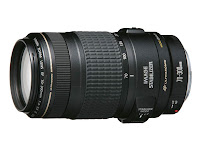
In the web there are many tests including authoritative ones , such as those conducted by Photozone . People going to make a purchase very often did not try the lenses they want, otherwise they would not seek here for information about them, so the added value we try to give here is just an analysis of the equipment that is always focused and guided , first and foremost by my experience as it is obvious but most important by limiting the too many variables that incur in the “perfect” choice .
In fact, many scientific tests are likely to make us lose sight of the most important thing: lenses are to be used on the field! Unless one is interested in the tests as such, the photographer only cares that equipment effectively responds to the uses he intended for it. Perfect lenses moreover do not exist and those that border on perfection are very expensive. Canon 24-70 2.8 L II and the Canon 70-200 2.8 IS L II zooms are amazing and certainly the best to accomplish most photographic situations , if we live with the weight and expense ( € 4000 both). However, the perfection for which we are willing to spend that much, is very often "wasted " . The photographer knows the equipment must be assessed on the basis of the uses to which he employs it and almost always chooses different equipment for different tasks . Clearly one of the thing to consider is that many of these do not relate to the quality in the strict sense . Personally, I consider the portability ( size and weight ) and the versatility a highly decisive factor . Then there is the cost , of course.
Not properly an article, I just expose here some of my thoughts that I hope will open up a discussion. All matters may decline into many insights and examples, maybe with time I'll make a few.
You can see some articles, tests, etc. I wrote in this blog that show the quality of prime lenses . However, a general comparison primes vs zooms was never presented. But a long experience also as a pro honesty has utmost led me to the following conclusions :
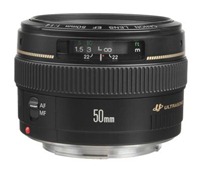
1 . the prime lenses are much lighter and smaller . If you've never used a fixed lens , like many today who start their adventure from the beginning with a zoom on camera , could be a missing factor. People often seek a very light all-around lens, such as for travel and one turns to zoom , where to get a certain quality one must necessarily choose very heavy (and expensive ) optics or sacrifice much of the image quality. In my experience, a 50mm ( on full frame of course) covers 90% of the situations of this kind.
2 . People will feel much less intimidated to be photographed if you use a small lens. You definitely do not look like a professional photographer. If this has the disadvantage of not tickle the vanity of many, for me it is a very positive factor .
3 . Prime lenses are much cheaper than any professional zoom of equal quality. For example the Nikon 24-70mm f2.8 will cost about 1400 euro , the Canon EF 24-70 2.8 L II least 2000 Euros , while the fixed focal length of at least equal quality (if not more ) have a cost between 200 and 300 Eu (the 50mm f1.8 only costs 90 Euros ) . Even by adding to the kit three more lenses instead of having a top professional zoom, makes you pay less and the quality is certainly higher.
4 . You do not need to have all possible focal lengths. Professional photographers often (and always in the past) use a pair of primes and choose among the more traditional focal lengths : 28mm , 35mm , 50mm, 85mm , 135mm. If you pay attention to the exif data of the pictures taken with the zoom ( in the Adobe Bridge or Lightroom there are statistics on the entire gallery) it is very likely that most of the photos taken stays (or is close to) two maximum three focal lengths, typically almost always the two extremes of the zoom) . With primes most of the time you just zoom with your feet! If you can not ( but often it is just a matter of " laziness " ), you can always crop a little the photo in your computer. This is not a problem with current cameras having high pixel density , 15 - 18MP , even for large prints!
5 . Quality: in virtue of the way they are constructed, prime lenses have amazing quality rarely achieved by zooms. But even if the quality is the same (and the zoom can reach that but they cost! Eg . The Canon EF 70-200 2.8L IS II , € 2000 !) The fixed focal lengths are always brighter ( 1 to 3 stop) and then give you more possibilities when shooting at night or if you are looking to get a shallow depth of field.
6 . Primes are usually very well built and last forever. They have fewer moving parts and internal lenses and so on average they last longer than a zoom . Often zoom are upgraded to new versions , the fixed lenses less and if it happens the "old" version is still excellent. The focus is always extremely fast, even if not ultrasonic , ultraetc.
7 . Primes teach you how to take better pictures! The need to zoom by feet teaches you to be more creative when you approach a scene. It is very important to learn to see according to a specific focal length. Not that you could not do with a zoom but it is necessary to be very methodical with a zoom. The fixed focal length lenses probably make us less lazy as photographers .
8 . If you use one or two focal lengths , the photos do not just tend to be better, they will be more consistent and rigorous as entire album or photo shooting. To choose primes in a professional work today can be a risk, but it is viable. It 's weird instead that amateur photographers who have all the time (and pleasure ) to photograph only according to their taste, consider the zoom a better choice.
9 . They are simply more fun! ( very subjective topic ) . Even just staying in the field of vanity, to know you shoot with the same angle of view used by Bresson and his companions does appeal to me much more than having a professional look with bulky and showy equipment.
10 . Conclusions and "pseudo- psychological" issues. We tend to believe that the choices we make come always from rational reasons and well-considered ones, but it is not so ... and advertising knows it! The apparent value of an object often ends up making us pay more, even though we may have lost hours reading and re-reading tests and reviews to find the best quality / price ratio . I believe that the narcissistic factor ( inherently exploited by the marketing) is bigger than we think . The amount of novice photographers , who may snap into automatic ( with integrated flash that opens without they know ... ) , you see them shooting with huge zooms, sometimes it 's ridiculous. However this shows something far worse : little attention to the beauty of the photography itself and too much attention to the narcissistic "beauty" of feeling photographer .
Owning a Ferrari does not make us smarter pilots and indeed probably penalizes us if we do not know how to drive it as an experienced driver. Photography when it becomes a status symbol (among others, a very cheap one today ) then it loses its value as much as technical or artistic and enters into a not very interesting field.
Other times the reason is only the ignorance. Until not long ago, one started photography having at least a prime in the kit, this was the norm, using primes was something that could be learned automatically. Today, my experience has taught me that no student starts having already a lens like that , and you need to teach the obvious.
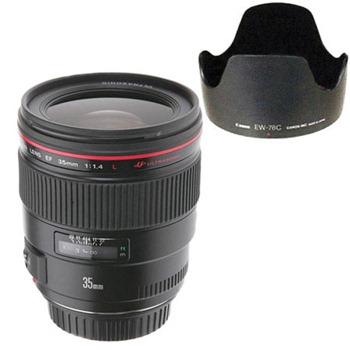
I attach some photo galleries in support of this argument , convinced that in the end the better argument in this area are always and only the photographs. This report example has been taken 95% with an EOS 5D II + EF 35mm 1.4 L. The remaining few shots with a EF 85mm 1.8 or an EF 17-40 f4 L . Before receiving the obvious objection that the 35mm 1.4 costs 1300 € , if the Canon produced a counterpart in the unprofessional midrange (such as the 50 1.4 and 85 1.8) I would certainly have preferred it. More on this, in the comparison test between the 35mm and the 50mm 1.4 L 1.4 (mid-range , non-professional ) :
Another gallery entirely taken with the 35 is the following. The added value here is obvious: it is impossible to take these pictures with a zoom, even raising at maximum the ISO. And in any case it is impossible to have the same quality (of course we talk about print resolution photos):
Per diverse ragioni che spiegherò meglio in un altro post, da un po’ di tempo sono tornato ad utilizzare quasi esclusivamente ottiche fisse, come agli inizi della mia avventura di fotografo con la pellicola 35mm.
Amsterdam, Paesi Bassi, 14 giugno 2012 Nikon annuncia oggi il lancio di un nuovo obiettivo zoom in formato FX con ampia escursione focale (da 24 mm a 85 mm), design compatto e riduzione delle vibrazioni. Grazie alla massima versatilità offerta dalla portata dello zoom che va dal grandangolo al teleobiettivo, e al corpo ultraleggero, questo obiettivo è la soluzione perfetta per tutti coloro che hanno una fotocamera FX e cercano una lente multifunzionale che non scenda a compromessi quando si tratta di qualità dell’immagine. Zurab Kiknadze, Product Manager, Obiettivi, accessori e software, Nikon Europe, ha affermato: “L’idea alla base di questo obiettivo è stata quella di unire un'ampia escursione focale con un design compatto e resistente, ma senza sacrificare la qualità dell’immagine offerta dalle reflex digitali Nikon di ultima generazione. Quest’ultimo gioiello di casa Nikon va ad arricchire la gamma di obiettivi zoom NIKKOR in formato FX, versatili e dal costo accessibile, ed è la soluzione ideale per chi cerca un obiettivo pratico che possa essere utile nella maggior parte delle occasioni”
8 giugno 2012 – I due nuovi obiettivi compatti e leggeri, uno zoom universale e una focale fissa tuttofare, offrono una serie di nuove funzionalità, tra cui l’autofocus continuo in modalità Movie, una qualità d'immagine superiore e una migliore flessibilità per catturare al meglio qualsiasi soggetto
I am not particularly interested in doing tests on the equipment unless they do show real differences on the filed and allow the photographer to better work in real photographic situations . Almost always, the laboratory tests dwell in particular on the sharpness of a lens , tested under conditions that never happen in reality. If a lens loses sharpness at the edges, in most real situations it is completely irrelevant , while greater accuracy and focus speed could make the difference between a photo to keep and one to trash.
Vi siete mai chiesti che cosa significano tutti quegli acronimi che accompagnano il nome di un obiettivo Canon? Sicuramente avrete notato che Sigma e Tamron eccedono nelle diciture, a ogni generazione di obiettivi ne aggiungono di nuove. Alla Canon e in misura minore Nikon fortunatamente le indicazioni essenziali sono sempre le stesse, eccone un elenco:
All photos of this article were made with essential equipment: a Canon EOS 40D + EF 50mm 1.8., without flash and by hand. As I’ll explained below, this is a sufficient and affordable setup for any beginner.
Stage photography - be it concerts or theatre performances or any indoor situations with artificial lights and without the use of additional lighting - is definitely one of the most popular genres for many amateur photographers who begin with dSLR photography, but at the same time one of the hardest even just due to technical complications.
I'm always in difficulty when a student who may have not even completed a basic training seeks for a quick guidance by me on how to deal with this type of photography. Because in addition to the lacking of a sufficient experience in order to understand the many technical difficulties, the student is often lacking of an adequate equipment too.
La stabilizzazione dell'immagine (IS) è una tecnologia utilizzata per ridurre le vibrazioni di un’immagine in fase di scatto. Nikon usa il termine VR, riduzione di vibrazioni, mentre la Canon applica l’acronimo IS, stabilizzazione d’immagine. Avendo la Canon inventato per prima questa tecnologia, si usa generalmente l’acronimo IS per descrivere questa tecnologia, senza entrare nello specifico di ciascun produttore. Entrambe le tecnologie comunque lavorano in maniera simile e soprattutto applicano la stabilizzazione alle ottiche. L’IS non è utilizzato solo in fotografia, lo si usa per stabilizzare binocoli, fotocamere e videocamere, telescopi astronomici.
---------------------------------------------------- L'AUTORE TIENE DIVERSI WORKSHOP DI FOTOGRAFIA PAESAGGISTICA. TUTTI I DETTAGLI NEL SITO: WWW.SCUOLAFOTOGRAFIA.NET ---------------------------------------------------
La fotografia di paesaggio viene praticata almeno una volta da qualsiasi fotografo. A chi infatti non è capitato di trovarsi davanti a uno scorcio paesaggistico affascinante, magari al tramonto, e non lo abbia voluto immortalare? E’ di fatto un tipo di fotografia con cui si cimentano tutti prima o poi, anche coloro che desiderano solo portarsi a casa un ricordo di un luogo particolarmente bello. E sistematicamente succede che...la foto ricordi molto poco di quello che i nostri occhi vedevano al momento dello scatto, perché?
GUIDA ALLA SCELTA DALLA FOTOCAMERA DIGITALE - PARTE 2 - Capire di quanti megapixel abbiamo davvero bisogno
Chi inizia a fare fotografia oggi potrebbe ignorare che la fotografia a pellicola, e come eredità anche la fotografia digitale, conosce diversi formati, ovvero diverse grandezze e proporzioni della pellicola o del sensore. L’avvento del digitale ha ulteriormente esteso il numero dei formati introducendo ad esempio il formato APS-c tra le reflex, più piccolo del 35 mm, o i sensori utilizzati dalle fotocamere compatte che sono ancora più piccoli. Quando si parla di formato non ci si riferisce solo alla grandezza del negativo, anche al rapporto tra i lati che questo può avere.
Canon ha annunciato lo sviluppo di un teleobiettivo zoom dotato di un moltiplicatore di focale integrato, l'EF 200-400mm f/4L IS USM EXTENDER 1,4 ×.
Ideato per la gamma EOS di fotocamere reflex digitali, il nuovo obiettivo sarà un complemento ideale per i fotografi sportivi e di fauna selvatica, offre una flessibilità eccezionale con un extender 1.4 × incluso che crea una gamma ancora più ampia di focale, se attivato: 280 - 560mm.
ARTICOLO IN ITALIANO >> This is not a scientific test (if you seek for laboratory tests, see those carried out by Photozone about ef 17-40 f4 L and ef 16-35 f2.8 L II). I had the chance to try out "on the fly" a Canon EF 16-35 2.8 L II that I wanted as a replacement for my current ef 17-40 f4 L, which has always served me very well, and was first mounted on a aps -c camera , the eOS 40D, then on a aps –h camera , the eos 1Ds mark 2 , where it really gave the best of themselves . From my experience the best format is the Aps-h x1.3, here the lens is exploited to its maximum, by eliminating only the outer parts that are notoriously soft and distorted (and a lot of vignetting occurs on super wide-angle focal lengths and large apertures) .
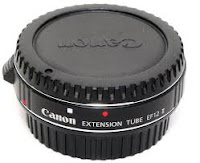
Ho voluto provare un po’ di obbiettivi che al momento possiedo in associazione con il tubo di prolunga per aumentare la capacità macro, l’extension tube EF 12 della Canon, versione I (unica differenza con la versione II e che monta solo ottiche EF non EF-S).
Grandi novità arrivano dalla Canon in anticipo sull'imminente appuntamento del Photokina 2010 dove forse vedremo presentare la tanto attesa eos 1Ds mark IV. Sono quasi tutte novità di fascia alta, per un pubblico di professionisti o amatori disposti a spendere parecchio.
Oltre ad aver aggiornato alla versione 2 i gloriosi obiettivi ora EF 300mm f/2.8L IS II USM e EF 400mm f/2.8L IS II USM, la Canon ha presentato uno zoom molto versatile pensato come complemento o teleobiettivo tuttofare di alta qualità, soprattutto per la portabilità, la leggerezza e l'ampia escursione focale coperta, che lo rendono l'ideale per chi voglia la qualità di un'ottica professionale anche in viaggio.
Nikon Europe ha annunciato l'introduzione di un nuovo teleobiettivo medio con apertura rapida, il teleobiettivo AF-S NIKKOR 85MM F/1.4G. Questo obiettivo sostituisce il molto apprezzato AF NIKKOR 85 mm f/1.4D IF con un design ottico totalmente nuovo, il motore Silent Wave (SWM) e trattamento Nano Crystal Coat, rendendolo la scelta essenziale per il moderno fotografo di moda e di ritratti. L'obiettivo prosegue la grande tradizione di ottiche 85 mm NIKKOR e riflette la dedizione continua Nikon all'innovazione ottica.
Canon EF 70-300 4-5.6 IS @ 300, f6.3, 1/250, iso 200. Su Eos 1d mk2, mano libera, no flash. Sharpening applicato. TEST SENZA ALCUNA PRETESA SCIENTIFICA...ma in situazioni reali.
Come da dettagli, ho testato questo nuovo obiettivo che invero ho preso come un sostituto economico e tuttofare in attesa di potermi permettere il 70-200 2.8 L IS II. Invece questo piccolo gioiellino della Canon mi sta piacevolmente sorprendendo.