Content

Showing posts with label TECHNIQUE. Show all posts

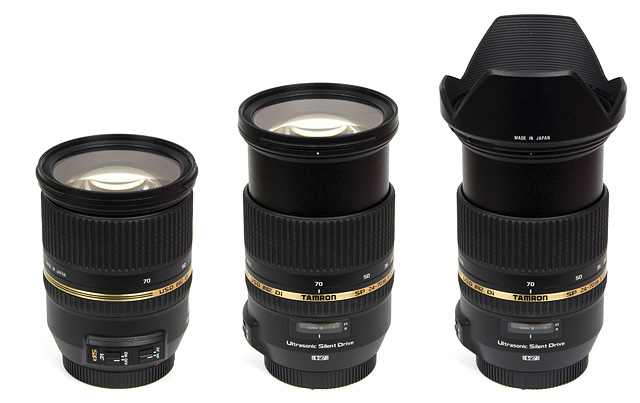
Tamron SP 24-70mm F/2.8 Dì VC USD short field’s review

Wednesday, 22 January 2014


Lens images from photozone

I went to shop today to purchase the Canon EF 24-70 F/2.8 L II that is going to become my workhorse for next years. Since I could not sell all the lenses I had for the change, they gave me the Tamron SP 24-70 F/2.8 for trying, if I am not satisfied I can purchase the Canon 24-70 later. They are so sure I'll like the tammy (since many other professional photographers buy it and are happy with it) to let me use it for some days and I wanted to give it a chance.

I do usually avoid third part lenses, not that they are bad, but for reliability, assistance, compatibility, autofocus and other small things I always prefer to use Canon lenses, even if they cost more. And the Canon EF 24-70 F/2.8 costs A LOT more! My decision to purchase it depends on the cash-back Christmas offer they make now (ok, let’s make some adv for Canon, they need it!  ^_^ SEE OFFER). Even after the 250eu refunding, the difference between the two is still a lot, about 750 eu.

I must then say that for almost half the price of the Canon I am very very tempted to keep the Tamron. Let’s see why. The Tamron has image stabilisation aka VC, which can be very useful, especially for the photography I make. I don’t do landscapes and if I do I prefer to use specific lenses (although I must say, before going on the details, that to my eyes the Tamron is a bit better than the Canon EF 17-40 F/4 L I used for it @24mm). For reportages, wedding and travel photography, no use of tripod, the VC is a good thing (Canon 24-70 is missing) but only at 70mm I do feel I need it. After testing, it seems to compensate to max 2 stops (not the 3-4 rated by Tamron, but it is very subjective), which is good nevertheless.

About shape and weight: It is a very compact lens although very large too, 82mm of diameter, it is not heavy (same as the Canon) and surprisingly feels less on the hand than my Sigma EF 35mm 1.4 Art I used for comparison, they are close though. Tammy weights 825 grams, it seems a solid tool to use. Is rated as tropicalized and the construction is indeed very good, although all plastic, good plastic. The lens barrel is mostly made of plastics but it is of high quality and it is tightly assembled. The new weather sealing is very welcome, of course. Same goes for the very fast and silent USD (ultrasonic AF drive).

I don't like the reverse ring for changing focal lengths, which pushes you to use the left hand in a not correct manner, then I find the very tiny focusing ring disturbing, but usable, and hate the fact that the lock is usable only at 24mm. But the zooming is good, mean there is not a chance that the focal length could change, the ring is neither too hard nor to loose to move. I tried a polarizer I had, 82mm, never used on other lenses, it made the focusing imprecise and the images blurred, probably due to bad polarizer itself not the lens, it is a cheap one.

Let’s see the IQ which is the most important thing for many (I was more concerned about AF). The image quality is very good, I suspect a little front focus what I have to try to assess later, as for now sharpening and contrast of images appear quite good @ F/8, even at the corners. I tried the Sigma 35mm 1.4 for comparison. It is a marvellous lens, we know it, an high quality prime. The Sigma is quite sharper, especially at corners. But the differences are not big. The Tammy is good, mean they are both high quality lenses, the Sigma is so much of an excellence that it does not make justice to the also good Tamron.

Let’s see some images (they are nothing special, sorry, soon I’ll ad some pictures I would make even if I was not to test a lens ^_^):

EX7B0489

This image is 35mm wide. I tested the Sigma that is native 35mm and the Tamron at 35mm. Both at F/8 to see the best sharpness in situations such as landscape photography (although it is not the reason I bought it for).

All pictures were processed with ACR 8.3, I only corrected the chromatic aberrations (which is very low for both lenses), not the distortions nor vignetting. Also the default sharpening of ACR (25%) was reduced to 0.

Sigma 35mm, 100% crop, centre:

S_F8_centre

And the Tamron:

T_F8_centre

At F/2.8 (what interests me more) the Tamron is definitely better than the Canon 24-105 F/4 L IS USM (at F/4) that I gave to the seller for change. We can see that at centre and F/8 the Tammy is just very slight less sharp than the Sigma. Bad light is confusing, afterward we show another image where we can appreciate how sharp the Sigma is, better even at F/8 in the centre. But let’s see further.

Sigma 35mm @ F/8, corner:

  S_F8_upright

Remember that NO sharpening at all is applied, even not the default sharpening applied by ACR, Lightroom DPP, etc.

This is the Tammy @ F/8:

T_F8_upright

Not bad at all!

Now I want to show another image’s crop after the pictures has been sharpened in PS. I applied a sharpening of 100% with a radius of 0.5 at the original size file (full resolution). Here is the image (again, not a nice one, I know! ^_^):

EX7B0484

Sigma @ F/8, centre, sharpened:

S_F8_center_sharpened

This is the Tamron @35mm & F/8 and sharpened:

T_F8_center_sharpened

Even after sharpening the Sigma is a tad sharper, it is visible but just at pixel level. And Sigma has more contrast, what can be added in post-production. Lateral CAs are very low which contributes to the high sharpness perception even at the corners, as we will see now. Indeed when you remove chromatic fringing the halo around objects remains. Both the Sigma and the Tamron have no problem with that. Let’s see.


S_F8_right_sharpened  

The Sigma is impressive. Look at the red car or the windows in the very corner, so sharp. Light was low. Here’s the Tamron:

T_F8_right_sharpened

Less sharp, here the difference is bigger than at centre. Let’s remember that this image has not been post-processed, mean the contrast could be improved.

Finally I wanted to test something that you can not test: zoom vs. prime. Sigma is better, end. But, what happens if you are on the field and a dramatic sunset happens in the far away and the only shot you can make is a narrower (field of view) FOV? You have to zoom. I repeat that I’m not interested in landscapes but the same can happen when photographing people. This is the shot we could take by zooming up to 70MM:

EX7B0490

So I wanted to see if by taking a Sigma 35mm image (the best) and up-resizing it to the same magnification of the Tamron @70mm the higher quality of Sigma could make it against the magnification given by a zoom. The answer is: NO…of course. Here the crops:

S_F8_CROP200_centre

T_F8_70MM_centre

After this I made some other shots on field using the F/2.8. At centre the Tamron is not loosing much in comparison to F/8. And you don’t need corner-to-corner sharpness when shooting with that aperture. Sometimes you do, but the VC is useful by allowing you to narrow the aperture at F/4 or F/5.6 for better DOF.

One of the thing that also positively impressed me is how well chromatic aberration is under control!. Lateral CA is really so few that it easy correctible in Camera Raw, Lightroom or DPP with no detail lost. By this picture taken at 70mm & F/2.8, we can appreciate it.

EX7B0498

This is the Lateral CA, very low. Of course it can be more with a stronger light:

CA_off

This is after activating the simple chromatic aberration correction in ACR 8.3 (and no need to further increase the correction on green/purple channels):

CA_on

All this determines a good perception of contrast/sharpness also at the borders.

One thing that needs further testing is the image stabilisation. It is very effective. Tamron does not claim, as Canon does, how many stops it can stabilize, and the thing can change a lot whether you shoot indoor with safe conditions or outdoor with wind and quick action. Of course remember VC does not freeze action, it only compensates the hand-shaking. By a short test you can see that the images start to be a bit blurred (only visible at 100% magnification, not visible after reduction to web dimensions) at 1/15. We talk about the long focal length, @70MM. So 1/15 is very good. I show the 1/15 image as the large one, at 600x600px, just to show how at a web resolution even a bit blurred image appears sharp enough:

 EX7B0500
1_15sec1_30sec1_60sec

One thing I noticed is that the VC can be very effective at very low speeds such as 1/15 but sometimes “fail” at much safer shutters such as 1/80, 1/50. This is confirmed by the DPReview’s site too. They say it fails to compensate the pressure on the shutter button. Let’s see an example, both pictures at 1/50:

EX7B0474crop1crop2

By the way, I remember shooting similar test images with my EF 24-105 F/4 IS L at F/4 (not 2.8 as here) and the focus area (centre) was not at all so sharp as Tamron’s. No sharpening has been applied.

This is an example of the bokeh at 24MM and close distance. It is good, not the best ever seen but to my eyes it is prime’s quality:

bokeh

Bokeh seems also ok by other images I made, transition is always very smooth, but I’ll test it with specific shots outdoor at 70mm.

Finally I liked the autofocus a lot.  It is fast and silent, it works well even with low light (I use an Eos 5D Mark3). I also liked that it can focus quite close with a good MFD (about 0.38) and AF is definitely better than the Sigma’s one which is ok. It seems also more consistent to me, mean the Sigma is not precise if near infinite or at MFD, the tammy seems better. You can see it in the VC-test images above, they were sho with AF and quite close to the subject

I do generally shoot very close to the subjects, even if not interested in macro photography. As reported in other reviews, the Canon 24-70 2.8 USM L II has some issues at short distances. Another good point for the Tammy.

I’ll expand this review in future…

EDIT: This is a full resolution image (ugly picture), the Tamron @35mm & F/8, so for landscape. This image has been a bit post-produced, a 50% of sharpening applied in ACR. Sigma 35mm is visibly sharper ONLY at the extreme corners. Just look by yourself, I’m impressed! 

RIGHT BUTTON THEN CLICK OPEN IN A NEW WINDOW

tamron

I finally had the time to make some shots with good light, these are not what I intend to use the lens for but can give a good idea how much the lens can resolve. This image is shot at 70mm (very usefull when trying to get an image without distortions and as flat as possible) and F8. Image has been processed in ACR and a sharpening of 100% (radius: 1.0px) has been applied in Ps). In ACR distortion and perspective have been corrected, chromatic aberration too, some green fringing remains at the border, see the fench on top/right but is barely visible):

RIGHT BUTTON THEN CLICK OPEN IN A NEW WINDOW

 FULLRES_70mmF8

©2013 Marco Palladino – all rights reserved

READ ALL >>>

What a beautiful picture ... Photoshop did it? About post-production and retouch.

Thursday, 30 May 2013

ARTICOLO IN ITALIANO >>

What a beautiful picture, who knows what treatments you have made in Photoshop? Willy-nilly any photographer is today confronted with such questions. Just think about the winner photo of the World Press Photo Award 2013, the beautiful photograph of Paul Hansen, that has aroused so many reactions, as it should be, the vast majority however addressed to the editing, that many have considered excessive, and once again all complaints against the photographer, who is guilty according to many of creating drama in picture out of retouching, with an almost painterly use of light and color, definitely got in a fake way, according to many critics.

READ ALL >>>

EOS 5D MARK3 - Noise issues at low ISO and Highlights Priority On

Wednesday, 1 May 2013
eos5d-markiii-ef50mmI have an Eos 5D Mark3 since few months, it replaced the Eos 5D2 I used in India that had partially left me because of poor weather sealing giving problems to the contacts. I always judged with some reservation the image quality of the 5d line , coming from the 1Ds mark2. These cameras do produce excellent images, but some  really bizarre problems in cameras of this level do continue to appear.
 
Already in the Indian photos, taken with Eos Eos 40D and 5D Mark2, I started to notice some strange things: the old 40D held up much better than the other when some overexposure of the shadows is applied in ACR, without altering the overall exposure. The Eos 5D Mark2 had often noise in the shadows at low ISO, even 100, a noise made of stripes (vertical banding), as the image from a fax.
 
I have not changed the Mark2  because the camera was broken, the problems with the contacts were resolved immediately by the excellent Canon Service Center in Rome. I decided to change it for many reasons, starting from the AF, a most versatile one,  but also for a significant improvement in the well-known problems of noise, at least as for these already seen in the EOS 5D2. A general upgrade in short, without waiting for miracles but certainly hoping for a more complete and versatile camera for all uses, eg. also for sport, in which the Mark2 was very lacking.
READ ALL >>>

Canon EF 17-40 f4 L field tests vs. EF 35mm 1.4 L, EF 20mm 2.8, Tokina 16-35, Sigma 12-24. Which one to choose as a wide-angle on full frame camera?

Monday, 10 December 2012

17-40

ARTICOLO IN ITALIANO >>>

In the web there are many tests including authoritative ones , such as those conducted by Photozone . People going to make a purchase  very often did not try the lenses they want, otherwise they would not seek here for information about them, so the added value we try to give here is just an analysis of the equipment that is always focused and guided , first and foremost by my experience as it is obvious but most important by limiting the too many variables that incur in the “perfect” choice .

In fact, many scientific tests are likely to make us lose sight of the most important thing: lenses are to be used on the field! Unless one is interested in the tests as such, the photographer only cares that equipment effectively responds to the uses he intended for it. Perfect lenses moreover do not exist and those that border on perfection are very expensive. Canon 24-70 2.8 L II and the Canon 70-200 2.8 IS L II zooms are amazing and certainly the best to accomplish most photographic situations , if we live with the weight and expense ( € 4000 both). However, the perfection for which we are willing to spend that much, is very often "wasted " . The photographer knows the equipment must be assessed on the basis of the uses to which he employs it and almost always chooses different equipment for different tasks . Clearly one of the thing to consider is that many of these do not relate to the quality in the strict sense . Personally, I consider the portability ( size and weight ) and the versatility a highly decisive factor . Then there is the cost , of course.

READ ALL >>>

Comparing EOS 5D MARK2 versus EOS 7D and vs. EOS 30D at high ISO (ISO6400), about noise, detail preservation, image quality, dynamic range

Friday, 7 December 2012

compared_eos_50Dvs60Dvs7D

VAI ALL’ARTICOLO IN ITALIANO >>>


Comparing EOS 5D MARK2 versus EOS 7D and vs. EOS 30D at high ISO (ISO6400),
about noise, detail preservation, image quality, dynamic range

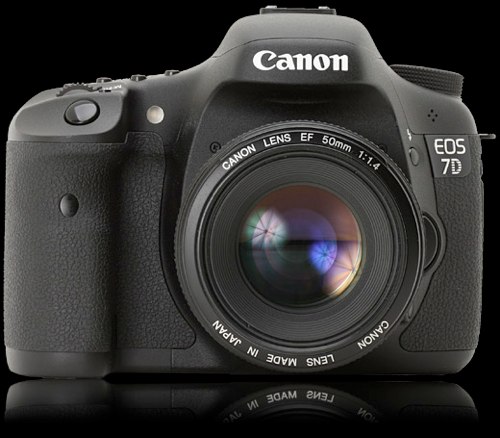
As always I run the test in a not scientific manner but simply aiming to highlight some aspects that I think are important in determining the choice of a camera or a lens, based on my personal needs. I have to decide whether to chose as second body to my Eos 5D Mark2 an Eos 7d or keep the current Eos 30D.

I've never used an Eos 7D, I would say that it is the only Canon camera in the area of semi-pro and pro that I never had in my hands once. Given the many threads about this camera, which can be found on the net, with absolute detractors and others who worship it, at the end I started to have serious doubts about the quality of the files produced by the 7D. In general, I am convinced that too many megapixels of nowadays cameras are only an problem, and very little do to the actual quality of an image. I also wanted to see if this marketing has even gone so far as to produce a camera with a density of pixel such to be worse than a precursor as the 30D, with only 8MP. In general I do not believe this, among other things, 18MP has now become the standard for all APS-C cameras from Canon.

eos5Dmk2I read around very bad things about the 7D: that it produces very soft files, that the autofocus fails, that as you just raise the ISO it produces a lot of noise and loses details, that eventually it has an image quality equal to an entry-level camera . Well, unless my student who has just became owner of a 7D has been particularly lucky, by having received a copy better than others, or maybe just thanks to the recently updated firmware, the fact is that by exploring this camera, now I would say... bullshit!

I understand even more as much the inexperience and indeed real ignorance of many makes so that the camera is charged for their blunders. The EOS 7D's autofocus if set on maximum accuracy, in one shot mode, is as precise as a razor. The 7D does not produce files softer than other cameras when shooting in RAW and the same photographic processing is applied to images.

As quick test we compared the detail on the area in ​​semi-shade (left eye) of a portrait, executed with an EOS 30D, EOS 7D and an EOS 5D Mark2, at well ISO 6400. Obviously, the EOS 30D does not have the ISO 6400 but just shoot at ISO 3200, RAW, and then raise exposure by 1 stop right in Camera RAW. I present to you the 100% crop of the three shots and then I'll make my comments. As it is standard for this type of comparison, I have NOT reduced the files from cameras with higher resolution but up-resized the lower resolution ones up to the largest size, in our case, the 21MP of the eos5D, or 5616 pixels on the longest side. The crop 100% means that this image at 700px corresponds to the detail taken as 100% magnification.

30D-7D-5D2-ISO6400

Conclusions

For all three pictures we used a EF 85mm 1.8 USM @ f4, to get the best quality from the optics.

In our crop, what we see is indeed the noise from the camera set at the highest ISO (6400 ), but also the preserved details, colour and dynamic range. We present therefore the partially shaded eye  of the portrait where certain differences are more noticeable. A partial recovery on the shadowed parts guarantees to better highlight the limits of the dynamic range of each camera. The lowerer DOF of the full-frame at F4 (identical for all three shots), makes the photo of EOS 5D slightly softer (the focus is on the right eye, not the left), but I assure you that level of sharpness on the focal plane of all three shots is identical.

What you need to look at is instead the iris of the eye, the nuances of colour, the details inside. Clearly the EOS 5D Mark2 is a notch above the other two, as one might expect from a sensor that has virtually half the density of photodiodes with respect to 7D, but not with respect to 30D. The EOS 30D as old as it remains, is still a good camera. Do not be fooled by advertising, its field quality is very high even today, especially if you use good optics. Files from the 30D when enlarged can almost match with a camera like the EOS 7D, even at ISO 6400 that are not available in the EOS 30D (actually a firmware update would be enough to have them, but of course the Canon is careful not to do so).

The image produced by EOS 7D is still better than the EOS 30D’s (always look at the iris of the eye), but not the same jump that you have on EOS 5D2. This is still a great result for the EOS7D, that ISO 6400 and 18MP have less noise and more detail and in shades and colour. Really good result.

This small test teaches us another thing: if we compare a file of 8MP and 18MP the real difference of magnification is about 30% (not double as one might expect). If you enlarge a file like an 8MP to 18MP, the difference in detail is really ridiculous; such a file if correctly processed and printed would produce no perceptible difference. What are then the 18MP of an EOS 7D good for, apart from the advertising? Well we actually need those, but not if we use the photos at 100% magnification. That is, if we do not need to crop the photo since we can get optically close enough, then between 8 and 18 the difference is virtually ZERO! But sometimes crop is unavoidable, for example in the photo of fauna and for sport. So then when a file is cut 50% to 4 MP or 9MP things get very different. The 9MP file still has lot details to make large prints, the other one begins to suffer a lot, at 4MP (still usable, with the right processing).

Canon EOS 7D while doubling the number of pixels and increasing by 30% the resolution still maintains a level of noise even less than 30D, this is definitely a great achievement and I would say not at all due to the noise reduction applied by the software, the files are in fact identical in Camera Raw in terms of sharpness. On final word, the EOS 7D is an excellent camera, even if image quality is not very much better than a 30D’s or 40D’s. You choose it for many other reasons: resolution to crop, as said, but also a high-performance autofocus in sports, a great construction and excellent sealing, the flash that remotely controls other flashes, etc. etc… in short, many other things that "make the life of a photographer better". Even to use it is a real joy, much better even than EOS 5D, in comparison 30D looks as a plastic toy (it is not). But:

if you do not take pictures in rain, for sport, wildlife, etc.., and you've purchased the EOS 7D to take pictures on vacation, convinced that the hundreds of euro more you paid will ensure you better photos, then you've got a blunder, commercially induced, but a blunder. The 7D is great, but only IF you use it at its maximum, in sports and / or wilderness area, then it really pays you off. Here's how some lamentations were born!

In another test, run against EOS 30D + EF 85mm 1.8 but at aperture of 5.6 and the same pose, we coupled the EOS 7D with a Canon EF 15-85 @ 85mm and aperture 5.6 (minimum that is allowed by the zoom at 85mm). Well despite the 8MP against 18MP, the 30D+85mm prime brings out more details, or rather: BETTER LENSES PRODUCE BETTER IMAGES DESPITE THE LOWER RESOLUTION OF THE SENSOR. Mind that the EF 15-85 is a great zoom lens and the picture it produced  is sharp, but the quality that you get with a prime even on an old camera is higher, namely: EOS 30D (used) + 85mm 1.8 costs about 700 euros, the EOS 7D (used) + 15-85 almost double it. Obviously they are very different set-ups for different purposes, but everyone can draw his own conclusions.

©2012 Marco Palladino – All rights reserved

READ ALL >>>

Reasons to always use prime lenses instead of zooms when it is possible

Friday, 30 November 2012

50_1.4&1.2

ARTICOLO IN ITALIANO >>

Not properly an article, I just expose here some of my thoughts that I hope will open up a discussion. All matters may decline into many insights and examples, maybe with time I'll make a few.

You can see some articles, tests, etc.  I wrote in this blog that show the quality of prime lenses . However, a general comparison primes vs zooms was never presented. But a long experience also as a pro honesty has utmost led me to the following conclusions :

1 . the prime lenses are much lighter and smaller . If you've never used a fixed lens , like many today who start their adventure from the beginning with a zoom on camera , could be a missing factor. People often seek a very light all-around lens, such as for travel and one turns to zoom , where to get a certain quality one must necessarily choose very heavy (and expensive ) optics or sacrifice much of the image quality. In my experience, a 50mm ( on full frame of course) covers 90% of the situations of this kind.

2 . People will feel much less intimidated to be photographed if you use a small lens. You definitely do not look like a professional photographer. If this has the disadvantage of not tickle the vanity of many, for me it is a very positive factor .

3 . Prime lenses are much cheaper than any professional zoom of equal quality. For example the Nikon 24-70mm f2.8 will cost about 1400 euro , the Canon EF 24-70 2.8 L II least 2000 Euros , while the fixed focal length of at least equal quality (if not more ) have a cost between 200 and 300 Eu (the 50mm f1.8 only costs 90 Euros ) . Even by adding to the kit three more lenses instead of having a top professional zoom, makes you pay less and the quality is certainly higher.

4 . You do not need to have all possible focal lengths. Professional photographers often (and always in the past) use a pair of primes and choose among the more traditional focal lengths : 28mm , 35mm , 50mm, 85mm , 135mm. If you pay attention to the exif data of the pictures taken with the zoom ( in the Adobe Bridge or Lightroom there are statistics on the entire gallery) it is very likely that most of the photos taken stays (or is close to) two maximum three focal lengths, typically almost always the two extremes of the zoom) . With primes most of the time you just zoom with your feet! If you can not ( but often it is just a matter of " laziness " ), you can always crop a little the photo in your computer. This is not a problem with current cameras having high pixel density , 15 - 18MP , even for large prints!

5 . Quality: in virtue of the way they are constructed, prime lenses have amazing quality rarely achieved by zooms. But even if the quality is the same (and the zoom can reach that but they cost! Eg . The Canon EF 70-200 2.8L IS II , € 2000 !) The fixed focal lengths are always brighter ( 1 to 3 stop) and then give you more possibilities when shooting at night or if you are looking to get a shallow depth of field.

6 . Primes are usually very well built and last forever. They have fewer moving parts and internal lenses and so on average they last longer than a zoom . Often zoom are upgraded to new versions , the fixed lenses less and if it happens the "old" version is still excellent. The focus is always extremely fast, even if not ultrasonic , ultraetc.

7 . Primes teach you how to take better pictures! The need to zoom by feet teaches you to be more creative when you approach a scene. It is very important to learn to see according to a specific focal length. Not that you could not do with a zoom but it is necessary  to be very methodical with a zoom. The fixed focal length lenses probably make us less lazy as photographers .

8 . If you use one or two focal lengths , the photos do not just tend to be better, they will be more consistent and rigorous as entire album or photo shooting. To choose primes in a professional work today can be a risk, but it is viable. It 's weird instead that amateur photographers who have all the time (and pleasure ) to photograph only according to their taste, consider the zoom a better choice.

9 . They are simply more fun! ( very subjective topic ) . Even just staying in the field of vanity, to know you shoot with the same angle of view used by Bresson and his companions does appeal to me much more than having a professional look with bulky and showy equipment.

10 . Conclusions and "pseudo- psychological" issues. We tend to believe that the choices we make come always from rational reasons and well-considered ones, but it is not so ... and advertising knows it! The apparent value of an object often ends up making us pay more, even though we may have lost hours reading and re-reading tests and reviews to find the best quality / price ratio . I believe that the narcissistic factor ( inherently exploited by the marketing) is bigger than we think . The amount of novice photographers , who may snap into automatic ( with integrated flash that opens without they know ... ) , you see them shooting with huge zooms,  sometimes it 's ridiculous. However this shows something far worse : little attention to the beauty of the photography itself and too much attention to the narcissistic "beauty" of feeling photographer .

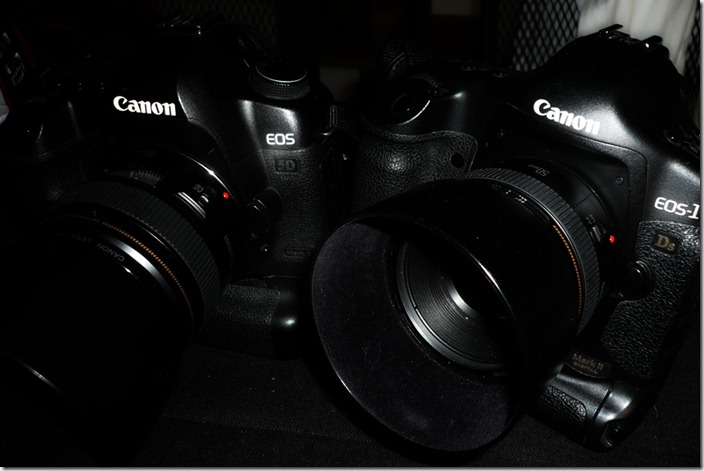
Canon-Lenses_2x35&50

Owning a Ferrari does not make us smarter pilots and indeed probably penalizes us if we do not know how to drive it as an experienced driver. Photography when it becomes a status symbol (among others, a very cheap one today ) then it loses its value as much as technical or artistic and enters into a not very interesting field.

Other times the reason is only the ignorance. Until not long ago, one started photography having at least a prime in the kit, this was the norm, using primes was something that could be learned automatically. Today, my experience has taught me that no student starts having already a lens like that , and you need to teach the obvious.

I attach some photo galleries in support of this argument , convinced that in the end the better argument in this area are always and only the photographs. This report example has been taken 95% with an EOS 5D II + EF 35mm 1.4 L. The remaining few shots with a EF 85mm 1.8 or an EF 17-40 f4 L . Before receiving the obvious objection that the 35mm 1.4 costs 1300 € , if the Canon produced a counterpart in the unprofessional midrange (such as the 50 1.4 and 85 1.8) I would certainly have preferred it. More on this, in the comparison test between the 35mm and the 50mm 1.4 L 1.4 (mid-range , non-professional ) :

REPORT SHOT DURING THE OLIMPIADI DEL SALENTO (Olympic games of Salento):

Another gallery entirely taken with the 35 is the following. The added value here is obvious: it is impossible to take these pictures with a zoom, even raising at maximum the ISO. And in any case it is impossible to have the same quality (of course we talk about print resolution photos):


READ ALL >>>

PHOTOSHOP CS6 e prova delle nuove potenzialità di Camera Raw 7.0

Thursday, 27 September 2012

Sto provando da alcuni giorni la versione CS6 di Photoshop. Il motivo che mi ha convinto non è tanto legato alle nuove funzioni di Photoshop in sé, sicuramente utili miglioramenti (come ad esempio l’interfaccia per il ritaglio, notevolmente ampliata nelle funzionalità) quanto piuttosto l’ottimizzazione degli algoritmi di esportazione dei file RAW, di cui s’è detto molto, e le nuove funzioni di calibratura delle luci che il nuovo camera raw così come Lightroom 4 ha introdotto.

cs6-croptool

READ ALL >>>

Fotoritocco e post-produzione fotografica: dove è il limite tra semplice sviluppo e alterazione? Esiste la foto naturale?

Tuesday, 18 September 2012

anteprima

Dall’avvento della fotografia digitale, si è aperta la possibilità di interventi massicci in fase di post-produzione, gli stessi che prima richiedevano operazioni più laboriose in camera oscura. La cosiddetta post-produzione non è altro che ciò che veniva comunemente chiamato “sviluppo fotografico” con la pellicola, allorché la fase di elaborazione post-scatto non si limitava solo a “sviluppare” correttamente il film (o creativamente, si pensi ad es. al cross-processing), bensì anche a reinterpretare la foto fino alla fase di stampa.

READ ALL >>>

Fotografare il Tramonto e l’Alba. Trucchi e suggerimenti per la fotografia di paesaggi naturali e urbani con la luce solare bassa all’orizzonte. Tecnica fotografica e guida online.

Wednesday, 18 July 2012
12
Il Tramonto...una parola che evoca infinte sensazioni ed esperienze è uno dei soggetti più fotografati, da chiunque. E’ un tipo di fotografia che non manca mai tra gli scatti di un viaggio o di una gita e malgrado sia un tema fotografico cercato continuamente, non appare mai banale proprio per il fatto che non esiste in natura un tramonto uguale all’altro. Le minime variazioni atmosferiche e la disposizione delle nuvole rendono ogni tramonto un’esperienza visiva unica, che produce infinite variazioni di colori in una stessa sera.

LEGGI L'ARTICOLO COMPLETO IN WWW.FOTOBIETTIVO.IT >>>

ENGLISH READERS, ARTICLE IS BEING TRANSLATED
 

READ ALL >>>

Il bilanciamento del bianco, la temperatura del colore e la resa cromatica. AWB, Bilanciamento automatico e impostazioni (daylight, tungsteno, flash, ecc.) nelle fotocamere digitali.

Thursday, 12 July 2012

imageIl nostro occhio riesce a vedere un foglio bianco come bianco in qualsiasi condizione di luminosità, la macchina fotografica invece no. Però prende il bianco come riferimento per rendere tutti gli altri colori. E' importante quindi che, in ogni condizione, la macchina riesca a riconoscere il bianco come tale. Non tutti i bianchi sono uguali, perché possono comprendere sfumature di altri colori. Anche un oggetto bianco puro cambia colore se viene illuminato da luci diverse.

La luce solare è una luce chiara senza tonalità particolari in pieno giorno, ma all'alba ed al tramonto tutto assume una diversa sfumatura di colore.
Tutte le fotocamere digitali hanno la regolazione automatica del bilanciamento del bianco, alcune però permettono di intervenire manualmente. E' sufficiente puntare l'obiettivo verso una superficie bianca e premere il bottone del bilanciamento. Oppure fotografare un foglio bianco e utilizzarlo come base del bilanciamento. Altre fotocamere permettono una scelta di bilanciamento, per esempio adattandolo alla luce solare piena, tempo nuvoloso, lampada incandescente o fluorescente, e luce del flash.

READ ALL >>>

Canon EF 35mm f1.4 USM L vs./contro Canon EF 50mm f1.4 USM test comparativo alle massime aperture di diaframma per nitidezza

Tuesday, 10 July 2012

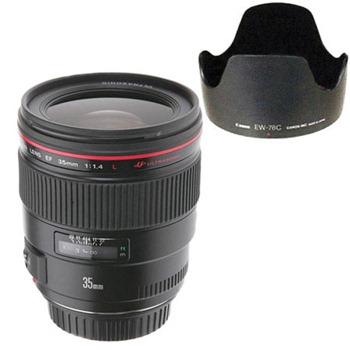
canon_ef_35mm_f_1_4l_usmCanon-50mm-f-1.4-USM

Per diverse ragioni che spiegherò meglio in un altro post, da un po’ di tempo sono tornato ad utilizzare quasi esclusivamente ottiche fisse, come agli inizi della mia avventura di fotografo con la pellicola 35mm.

LEGGI ARTICOLO IN FOTOBIETTIVO MAGAZINE >>

READ ALL >>>

Schemi di luce e illuminazione nella fotografia di ritratto. Nozioni fondamentali per la ritrattistica in studio e all’aperto. Ritratto maschile e femminile.

Thursday, 5 July 2012
STUDIO FOTOBIETTIVO
 
Una delle competenze principali di un fotografo professionista nel ritratto è la percezione della luce e della sua natura nelle diverse forme. Che sia luce naturale o di studio, il fotografo ritrattista deve rappresentare esteticamente espressioni, umori, emozioni profonde e riportare il tutto in un’immagine.
 
Nella fotografia di ritratto un elemento fondamentale è la capacità di disporre le luci per rendere l'effetto desiderato. Comprendere l’illuminazione in ritrattistica è necessario non solo per illuminare il soggetto quanto molto di più per renderne la forma e il carattere, che deve essere trasposta su una superficie bidimensionale piana.
 
 
ENGLISH READERS, ARTICLE IS BEING TRANSLATED
 

READ ALL >>>

FOTOGRAFIA SPORTIVA, sport indoor, calcio, basket, tennis. Brevi suggerimenti pratici per chi si avvicina a questo genere fotografico affascinante e dalle sorprendenti evoluzioni tecnologiche.

Monday, 2 July 2012

LEGGI ARTICOLOLa fotografia sportiva presenta molte e diverse opportunità di catturare immagini vibranti e cariche di impatto, aldilà della disciplina fotografata. Nessun altro genere presenta altrettanta azione e movimento e richiede al fotografo di tradurre in un’immagine statica qualcosa di altrettanto dinamico e spesso anche drammatico.

E’ un genere fotografico che ha una storia e tradizione che risalgono alla nascita della fotografia moderna, alla possibilità tecnica di congelare ciò che l’occhio umano percepisce come un continuo dinamico e immediatamente alla nozione estetica che questo riporta, sia in termini di visione che di istante.

LEGGI ARTICOLO COMPLETO IN FOTOBIETTIVO >>

READ ALL >>>

Canon Eos 1ds Mark 2 e Eos 5d Mark 2 a confronto. Differenze pratiche e di utilizzo e qualità di immagine sul campo e in test mirato. Qual è la scelta migliore per un fotoamatore o per un professionista low-budget?

Tuesday, 8 May 2012
Possiedo da alcuni giorni una Canon eos 5d mark2, acquistata usata a un prezzo molto conveniente, oggi che molti professionisti e amatori si lanciano sull'ultimo ritrovato tecnologico, la mark3, si iniziano a trovare sul mercato delle ottime occasioni.
La eos 5d mark II è diventata un riferimento di qualità sia per i fotoamatori più esigenti sia in tanti ambiti professionali, a partire dai matrimonialisti, così come tra moltissimi reporter. L'uscita della sorellina maggiore certamente non la rende obsoleta, ma sappiamo bene come agisce la componente psicologica del marketing tecnologico, sul desiderio di comprare il giocattolo più bello e nuovo.

LEGGI ARTICOLO IN WWW.FOTOBIETTIVO.IT


ENGLISH READERS, ARTICLE IS BEING TRANSLATED
READ ALL >>>

Fotografia paesaggistica: corretta esposizione - NOTE

Sunday, 1 April 2012

Uno scatto fatto "di sfuggita" mentre salivo a Forca D'Acero per recarmi alla mostra di Pescasseroli, un momento di particolare bellezza del cielo che non si è più ripetuto nei giorni seguenti. Posto questa foto per ragionare su alcuni aspetti della resa delle luci nel digitale...

_MG_3150

EXIF: CANON ESO 40D, EF 17-40L @17, F9, 1/200, ISO100, HANDHELD

E' frequente in questo tipo di fotografia paesaggistica dover affrontare una scelta problematica sull'esposizione da usare.

READ ALL >>>

Canon EF 70-300 f4-5.6 IS vs/against the Canon EF 70-200 f4 L IS - field tests for sharpness, distortion, vignetting, reliability and speed of autofocus, with Canon Eos 1ds Mark2

Saturday, 17 March 2012

a-confronto,-chiusi

ARTICOLO IN ITALIANO >>

I am not particularly interested in doing tests on the equipment unless they do show real differences on the filed and allow the photographer to better work in real photographic situations . Almost always, the laboratory tests dwell in particular on the sharpness of a lens , tested under conditions that never happen in reality. If a lens loses sharpness at the edges, in most real situations it is completely irrelevant , while greater accuracy and focus speed could make the difference between a photo to keep and one to trash.

READ ALL >>>

Contact Form

Name

Email *

Message *